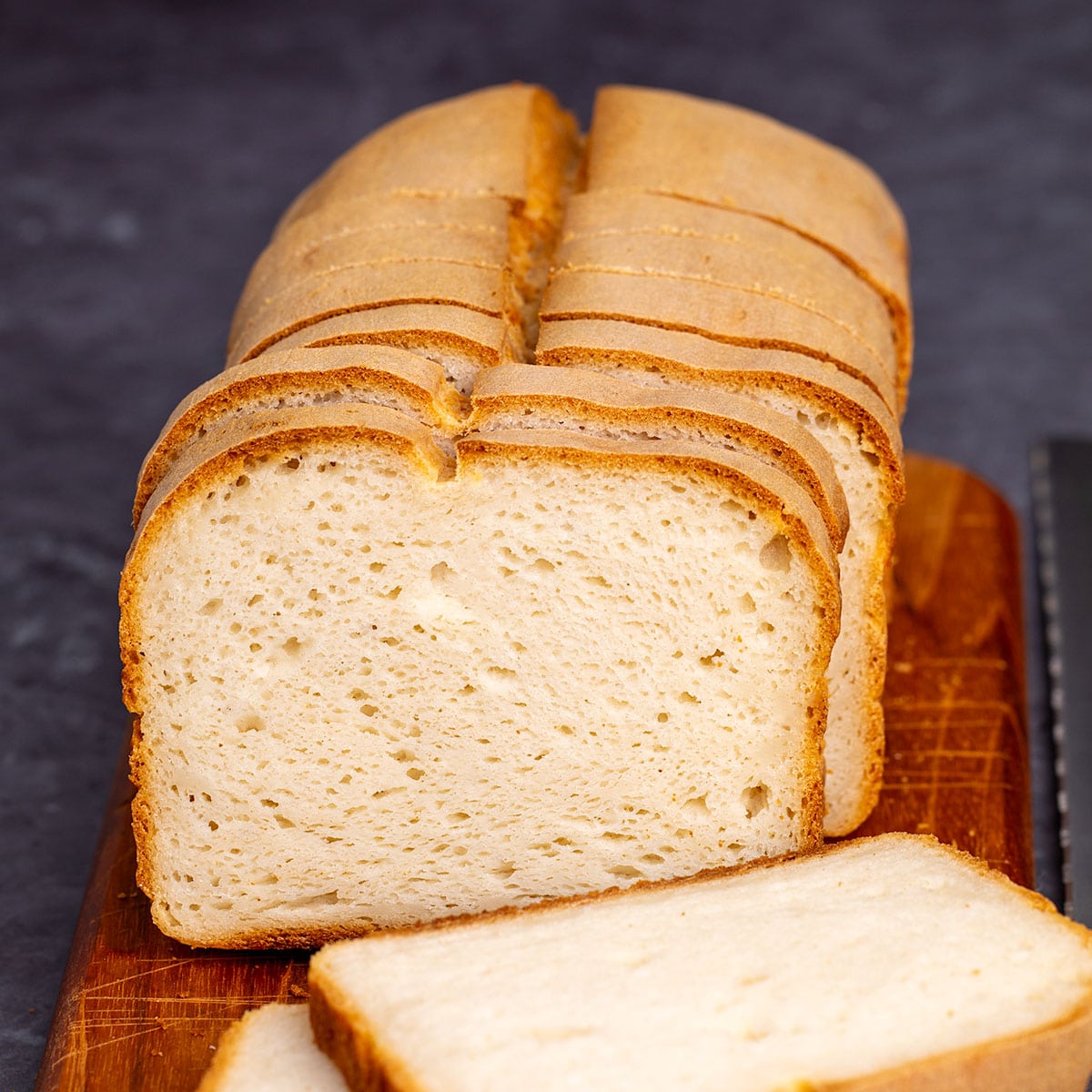
Serves10
Gluten Free Sourdough Bread Recipe
From glutenfreeonashoestring.com
Serves 10Prep: PT20M · Cook: PT60M
Ingredients
- 3 cups all purpose gluten free flour blend ((See Recipe Notes))(710 mL)
- 3 tsp xanthan gum , omit if your blend already contains it(15 mL)
- 9 tbsp tapioca starch/flour(135 mL)
- 2 tbsp granulated sugar(30 mL)
- 1 1/2 tsp kosher salt(7 mL)
- 3/4 cup gluten free wild yeast sourdough starter (fed within previous 12 hours (See Recipe Notes))(175 mL)
- 1 1/2 cups warm milk ((about 95°F), plus more by the tablespoon) [Original amounts; scale each quantity separately]
- 4 tbsp unsalted butter , at room temperature(60 mL)
- Melted butter (for brushing on top to help browning (optional))
Instructions
- Grease a standard 9-inch x 5-inch loaf pan and line with parchment paper. Set the pan aside.
- In the bowl of a stand mixer fitted with the paddle attachment or a large bowl with a hand mixer fitted with dough hooks, place the all purpose flour, 3 tsp xanthan gum (15 mL), 9 tbsp tapioca starch/flour (135 mL), 2 tbsp granulated sugar (30 mL), and 1 1/2 tsp kosher salt (7 mL), and mix or whisk to combine well.
- Add the starter, 1 1/2 cups of milk, and the butter, and beat on medium speed to combine. This is a batter-style bread dough, so it won’t resemble traditional bread dough, but rather a soft cookie dough.
- Turn the mixer up to medium-high speed and beat until the dough has taken on a whipped appearance (about 5 minutes). The dough should be tacky to the touch, but should hold its shape when scooped.
- If your dough feels at all dry to the touch, add more milk by the tablespoon, beating it in until well-combined, until the dough reaches the proper consistency.
- Transfer the bread dough to the prepared loaf pan. Using a moistened spatula, press the dough into every corner of the loaf pan and spread the top into an even layer.
- For a more traditional loaf shape, pile the dough a bit more toward the center in a dome.
- Cover the loaf pan with lightly oiled plastic wrap and allow it to rise in a warm, draft-free place until it’s reached about 150% of its original size, at least 4 hours. It will not fully double in volume, and will rise more in the oven than it does raw.
- Even traditional yeast bread dough will take longer to rise properly in colder, drier weather and less time in warmer, more humid weather.
- This wild yeast sourdough bread will take longer to rise than any other, and will depend in part upon the age of your starter.
- This bread dough is much less likely to overproof and take on that pock-marked appearance than bread made with conventional yeast. If you’re unsure about whether the bread has proofed enough, allow it to keep rising.
- When the bread is nearing the end of its rise, preheat your oven to 400°F.
- Remove the plastic wrap and, using a sharp knife or lame, slash the top of the loaf from one short end to the other about 1/4-inch deep.
- Brush the top of the risen loaf generously with melted 4 tbsp unsalted butter (60 mL) before baking as an optional step to aid the loaf in browning.
- Place the pan in the center of the preheated oven and allow to bake for 30 minutes.
- Reduce the oven temp to 350°F, rotate the pan 180° around, and continue to bake until center of the loaf reads 200°F on an instant read thermometer (about 30 minutes more).
- The crust may not darken as much as you expect, but the loaf should sound hollow when thumped quickly with a finger.
- Remove the pan from the oven and allow the bread to cool for about 10 minutes in the pan before transferring to a wire rack to cool completely before slicing and serving.
- To freeze the bread, cool the loaf completely, then slice, wrap tightly and freeze the slices. Defrost as many slices at a time as you need in the toaster.