Clean recipe · gfjules.com
Gluten Free Sourdough Bread Recipe
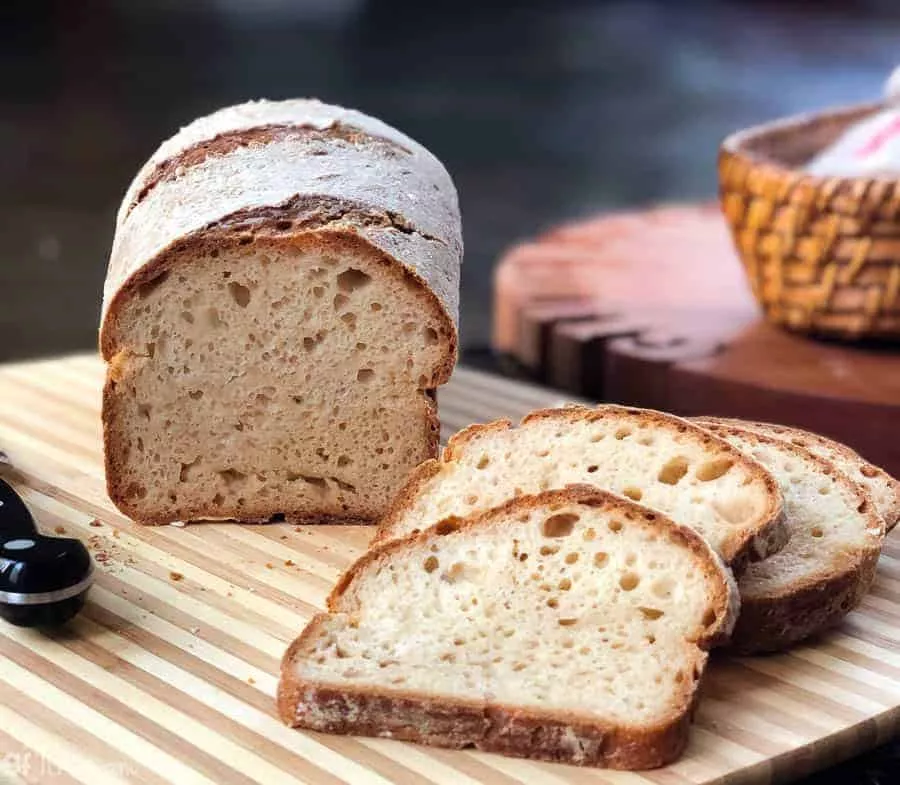
This comprehensive gluten free sourdough bread recipe explores all the nooks and crannies of how to make the perfect gluten free loaf!
Original recipe: gfjules.com
- Yield:
- 12 servings
- Prep:
- 20 min
- Cook:
- 65 min
- Total:
- 255 min
Adjust servings, check off ingredients, and save a copy in the recipe reader.
Ingredients
- 1 gfJules® Gluten Free Bread Mix*
- 3 (420) cups (grams) gfJules® Gluten Free All Purpose Flour OR gfJules Corn-Free Multigrain Flour
- 1/2 (70) cup (grams) gfJules Corn-Free Multigrain Flour
- 2 (6) teaspoons (grams) kosher sea salt
- 1 teaspoon rapid rise yeast or active dry yeast ((OPTIONAL, but recommended if using very young starter or less rise time))
- 2 Tablespoons apple cider vinegar
- 1/4 (56) cup (grams) sugar (or honey for softer crust)
- 2 ½ (12) Tablespoons (grams) whole psyllium husks (DO NOT ADD if using gfJules Bread Mix)
- 3/4 (150) cup (grams) active gluten-free sourdough starter ((feed 4-6 hours before))
- 1½ (12) cup (ounces) bubbly liquid (like club soda, sparkling water, ginger ale OR naturally gluten-free beer )
Instructions
- Bring all ingredients to room temperature.
- Preheat oven to 200°F if rising there.
- Stir the following ingredients together in a large mixing bowl: apple cider vinegar, sugar, psyllium husks, and GF sourdough starter. Mix until smooth and thickened, approximately 2 minutes. (If using gfJules Bread Mix, stir just until mixed, since you aren't adding psyllium.)
- In a separate bowl, whisk together remaining dry ingredients, then slowly add into the large mixing mixing bowl together with bubbly liquid. Use the paddle attachment on a stand mixer or a dough mixer hand tool. Mix until dough comes together. (If adding active dry yeast, proof yeast before adding.) Mix for two minutes with mixer, longer if by hand.
- Transfer dough to a clean counter or pastry mat dusted well with gfJules Flour. Turn dough several times in flour to smooth the dough and shape into a ball or a log for a loaf pan.
If Baking in Loaf Pan:
Transfer dough to an oiled or parchment-lined Pullman Pan or 9x5 loaf pan, lightly dusted with gfJules Flour, or to floured parchment-lined pan or bowl for rising. Spritz with water, brush with olive oil, and dust the top of the dough with more gfJules Flour for best results.- Cover with oiled plastic wrap or damp tea towel and set inside oven warmed to 200℉. Turn oven off and turn light on.
- Allow the dough to rise for at least 1½ hours, or up to 4 hours before baking. Alternatively, after 3 hours, remove to refrigerator for further overnight rise (wrap well to keep from drying out). If refrigerating overnight, bring the dough to room temperature before baking the next day.
- Preheat oven to 350° F or 325° F convection.
- Remove plastic wrap and slice across the top of the dough as pictured to direct the rise.
- If you prefer a very crunchy crust, fill a spray bottle with water and spritz the dough again before baking, and again every 15-20 minutes while baking.
- Bake loaf in the pan for 75 minutes and test with a bread thermometer. The internal temperature should reach at least 205° F before removing to cool. If the bread is browning too much, cover with foil in order to keep baking.
- Once bread is fully cooked, remove to cool on a wire rack for 15 minutes before removing from the pan. Allow to fully cool before slicing.
If Baking Artisan Bread:
Transfer to a proofing basket or oiled parchment-lined glass bowl.- Cover loosely with a warm, damp tea towel or oiled cling wrap and place in a warm spot to rise at least 1½ hours, or up to 4 hours before baking. Alternatively, after rising, remove to refrigerator for further overnight rise (wrap well to prevent drying out). If refrigerating overnight, bring the dough to room temperature before baking the next day.
- Invert gently onto a parchment lined baking sheet and remove basket or bowl. Cut a slice across the top at an angle with a lame or sharp knife before baking.
If Baking in Dutch Oven or Using Baking Shell:
Place Dutch Oven inside oven and preheat oven to 500°F. If using a baking steel and shell method, place the baking steel on the oven rack to preheat (no need to preheat the baking shell).Once the Dutch Oven is preheated, remove lid and place parchment with dough boule inside, spritz with water, then replace the lid and put the Dutch Oven back inside the oven. If using baking shell, transfer loaf onto parchment and slide onto hot steel in the oven (using a dough or pizza peel helps here) then cover with baking steel.Bake for 20 minutes covered, then remove the lid and reduce the oven temperature to 450°F and bake for 25 more minutes. *To prevent the bottom of the loaf from burning, place an oven safe pan at least the diameter of your Dutch Oven or steel on the rack just below and fill with ice cubes. This will provide both steam and a buffer between the heating element and the bottom of the pan.*If Baking On Baking Sheet:
If baking without pan, place bread on parchment lined pan in 500°F preheated oven, then immediately reduce the temperature to 450°F and bake for 35 minutes, test internal temp and continue to bake if needed -- bake until bread is browned and internal temperature reaches at least 205°F. *To prevent the bottom of the loaf from burning, place an oven safe pan at least the diameter of your bread on the rack just below your baking pan and fill with ice cubes. This will provide both steam and a buffer between the heating element and the bottom of the pan.*- Using either method, once the bread is baked, turn the oven off but leave the bread inside the oven with the oven door cracked for another 20 minutes before removing. Allow to fully cool before slicing to prevent any gumminess.